
Analysts are increasingly optimistic about India's capital markets, with HDFC AMC, CAMS, and KFin Technologies identified as top investment picks. This optimism stems from a structural shift in household savings towards financial instruments and an expected multi-year earnings expansion for market infrastructure providers and asset management companies.

Godrej Properties closed FY26 with record bookings and presales, exceeding its annual guidance, but brokerages express concerns over weak cash-flow generation and the ability to sustain growth amidst a muted real estate market.

TVS Motor Company is strategically positioned for sustained outperformance in the domestic two-wheeler industry, propelled by increasing market share in scooters, premium motorcycles, electric vehicles (EVs), and robust export growth, according to analysts.
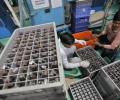
Escalating geopolitical tensions in West Asia are beginning to disrupt India's automotive supply chain, leading to rising commodity prices, logistics bottlenecks, material shortages, and pressure on consumer demand, with two-wheeler makers already raising prices.

IT major HCLTech reported a 4.20 per cent year-on-year rise in consolidated net profit to Rs 4,488 crore for the January-March quarter of FY26, but projected a modest 1-4 per cent revenue growth for FY27, citing market volatility and reduced discretionary spending.
Godrej Properties Limited (GPL) reported its highest-ever quarterly profit of 649.5 crore in Q4 FY26, a 70.13 per cent year-on-year increase, driven by record revenues and bookings. The company aims for over 39,000 crore in residential bookings for FY27 and plans to raise up to 3,000 crore through debt securities.

Banks are witnessing a surge in hiring for sales staff in secured segments such as home, vehicle and gold loans as compared to the recovery category, driven by a boost in business growth, and a host of regulatory measures aimed at improving ease of doing business, according to industry experts.

Hindustan Unilever (HUL) exceeded consensus estimates in Q4FY26, driven by lower overheads and 6 per cent consolidated volume growth. However, the company anticipates further price hikes to counter an expected 8-10 per cent material cost inflation, while maintaining a mid-term margin guidance of 22.5-23.5 per cent.

Indian companies are increasingly turning to share buybacks as a preferred payout strategy, driven by recent tax framework changes that make them more tax-efficient for non-promoter shareholders and a fall in stock prices.

Infrastructure major Larsen & Toubro (L&T) reported a 3 per cent year-on-year decline in consolidated net profit for Q4 FY26, reaching 5,325.60 crore, primarily due to exceptional gains in the previous year. Despite this, the company's consolidated order book surged by 28 per cent to 7.4 trillion, with international orders accounting for 52 per cent.

One 97 Communications Ltd, operating under the Paytm brand, has transitioned to a majority Indian-owned and controlled company, reflecting increased domestic investor confidence and improved financial performance.

Dabur India's stock has fallen over 17 per cent since the start of the Iran war, driven by concerns over a weak monsoon, the West Asian crisis, and rising input costs, which are expected to impact the company's revenues and margins, particularly affecting its significant rural sales and international markets.

Fast-moving consumer goods (FMCG) companies like Dabur India and Marico anticipate high single-digit growth in Q4FY26, driven by strong domestic demand in India, which is helping to offset the negative impact of geopolitical conflicts in West Asia on their international businesses.

Analysts are revising down India Inc's financial year 2026-27 (FY27) earnings growth forecasts, citing persistently high crude oil prices above $100 a barrel due to the West Asia conflict, which is expected to dent corporate financial performance in the coming quarters.

Sun Pharmaceutical Industries' Executive Chairman Dilip Shanghvi described the USD 11.75 billion acquisition of US-based Organon & Co as both a "happy" and "bit anxious" moment, acknowledging the significant debt required to fund the large transaction.

Champagne consumption in India is expanding beyond major metropolitan areas into smaller cities like Kanpur, Guwahati, and Lucknow, driven by a desire for sophisticated lifestyle declarations and a growing appreciation for the beverage.
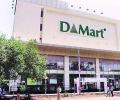
Shares of Avenue Supermarts, operator of DMart, fell 5.2 per cent after reporting mixed Q4 FY26 results, with brokerages offering divergent 'sell', 'buy', and 'hold' ratings based on factors like valuation, competitive intensity, and store expansion strategies.

'Markets never fully lose hope. But an important shift could come if the Strait remains closed -- moving from high prices to no prices.'

Ola Electric is making a renewed push into the electric motorcycle market with aggressive pricing and in-house battery manufacturing, aiming to replicate its earlier success in electric scooters while addressing past quality and service issues.

Moody's Ratings on Monday downgraded Tata Motors' outlook to negative from positive following a cyber attack on its British arm Jaguar Land Rover which has led to a complete production halt. The rating agency affirmed the Mumbai-based auto major's Ba1 corporate family rating (CFR).

India's economy is projected to maintain growth above 7 per cent in 2026-27 (FY27), supported by strong domestic consumption and investment, even as global growth faces risks from geopolitical tensions, according to industry body Assocham.

India's services sector growth slowed in March, reaching a 14-month low, according to the HSBC India Services PMI. The slowdown reflects weaker new business intakes and rising input costs, particularly in fuel, transport, and logistics.

'As re-industrialisation gathers pace across regions like Asia, Europe and the US, a wide range of products and inputs will see demand.'

Small- and midcap stocks have delivered their biggest monthly rally in 12 years, but rising oil prices and global tensions could make the road ahead volatile.

Infosys shares experienced a significant drop, hitting a 52-week low, after the company announced its Q4FY26 results and provided a modest revenue growth guidance of 1.5-3.5 per cent in constant currency for FY27, falling below market expectations and raising concerns about AI-led deflation and margin pressures.

Indian carmakers experienced a robust start to the new fiscal year, with an estimated 4.5 lakh passenger vehicles sold in April, marking a 27 per cent increase year-on-year, attributed to factors like GST 2.0, repo rate cuts, and income tax benefits.

Leading jewellery companies, Titan Company and Kalyan Jewellers India, have reported better-than-expected top-line growth in Q4 FY26, driven by robust same-store sales growth, higher average ticket sizes, and an improvement in buyer growth, signalling a strong recovery in demand.

German carmaker Audi plans to reassess and adjust its product launch strategy in India once the specific details of import duty reductions under the India-EU free trade agreement (FTA) become clear, according to Balbir Singh Dhillon, the brand's director in India.

Indian insurance companies are bracing for reduced profitability in Q4FY26, primarily due to the rationalisation of GST on retail life and health policies, leading to a loss of input tax credit, coupled with volatility in equity markets impacting investment income.

There are hopes of a turnaround in overall corporate earnings after six quarters of single digit growth.

Travel is now the dominant spending category for India's affluent consumers, who are prioritising experiences and luxury goods over retail buying, according to a new report.

'... with the rest split between mid and smallcaps, as valuations are becoming more attractive across segments.'

Infosys reported a 20.8 per cent increase in consolidated net profit to 8,501 crore for the January-March quarter of FY26, with revenue from operations rising 13.4 per cent to 46,402 crore. The IT major has guided for a 1.5 to 3.5 per cent revenue growth for FY27, driven by momentum in financial services, utilities, and emerging AI services, despite a volatile macroeconomic environment and geopolitical risks.

India's GST revenues experienced significant growth in March, reaching pre-tax cut levels, driven by increased imports and domestic sales. The report analyses the impact of tax rate changes and provides insights into future trends and economic stability.

Biocon aims to become the world's leading insulin company, capitalising on larger pharmaceutical rivals' strategic shift towards newer, high-margin GLP-1 diabetes therapies. The company plans to expand its insulin presence across 80 markets, focusing on value maximisation and addressing the indispensable need for insulin, particularly for Type-1 and late-stage Type-2 diabetics.

India's electric passenger vehicle market saw an 87.4 per cent year-on-year increase in FY26, reaching 233,246 units, primarily driven by the mid-size SUV segment (20-30 lakh price bracket), while the entry-level segment (sub-10 lakh) experienced a decline.

Major paint companies in India, including Asian Paints, Berger Paints, Akzo Paints, and Kansai Nerolac, have announced price hikes ranging from 1% to 8% across various product lines, effective from mid-March to late April, in response to persistently high crude oil and gas prices.

Ongoing geopolitical tensions in West Asia have slowed deal momentum in Dubai's luxury residential market, but Indian high-net-worth individuals (HNIs) are not exiting their marquee assets, with any 'discounted' resale deals attributed to investor liquidity stress rather than geopolitical flight.
ICICI Bank reported a 9.28 per cent increase in its consolidated net profit to Rs 14,755 crore for the March quarter of FY26, primarily driven by a nearly 90 per cent reduction in provisioning. The bank's executive director, Sandeep Batra, noted strong asset growth but expressed caution regarding the geopolitical situation in West Asia.
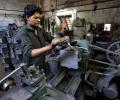
India's manufacturing sector growth slowed to a four-year low in March, impacted by cost pressures, competition, market uncertainty, and the Middle East conflict, according to the HSBC India Manufacturing PMI.
